1. The “Invisible Problem” in Big Bolts
If you manufacture or source large bolts like M30, M36, or M42, you already know:
The problem is not forming the bolt.
The problem is finishing it.
Especially… the chamfer on the hex head.
At first glance, it looks simple — just a small bevel on the edge.
But in reality, this tiny detail often becomes:
- A bottleneck in production
- A source of inconsistent quality
- A hidden cost center
- A reason for customer complaints
2. Why Chamfering Becomes a Problem (Only When You Scale Up)
For small bolts, chamfering is almost “free” — done inside cold heading dies.
But once you move to M30+, everything changes:
🔹 Problem 1: Forming Limitation
- Cold heading struggles to produce stable chamfers at large diameters
- Hot forging creates rough, uneven edges
👉 Result: Chamfer must be done as a secondary operation
🔹 Problem 2: Manual Processing is Too Slow
Many factories still rely on:
- Lathe chamfering
- Handheld tools
- Drill-based chamfering
Which leads to:
- Low efficiency
- High labor cost
- Operator dependency
👉 One worker, one machine, one bolt at a time…
🔹 Problem 3: Inconsistent Quality
You’ve probably seen this:
- Uneven chamfer angles
- Residual burrs
- Over-cut or under-cut edges
👉 Not acceptable for:
- Structural bolts
- Wind power applications
- High-strength assemblies
🔹 Problem 4: Post Heat Treatment Risks
After heat treatment:
- Edges become brittle
- Sharp corners crack easily
👉 Without proper chamfer:
- Micro cracks form
- Coating fails at edges
3. Traditional Methods vs Reality
| Method | Reality |
|---|---|
| Lathe | Accurate but painfully slow |
| Hand tools | Cheap but inconsistent |
| Die chamfer | Not reliable for large sizes |
| Outsourcing | Expensive and uncontrollable |
👉 Conclusion:
None of them scale well for modern production.
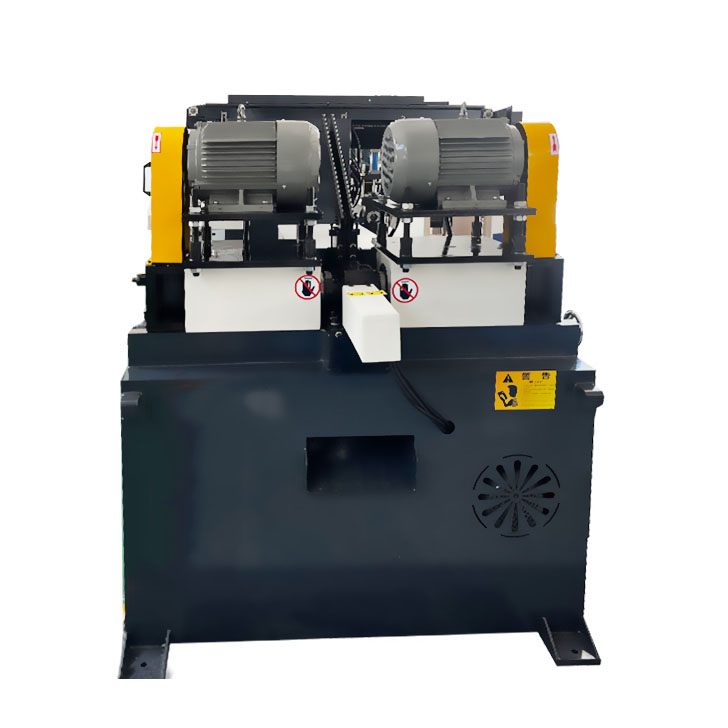
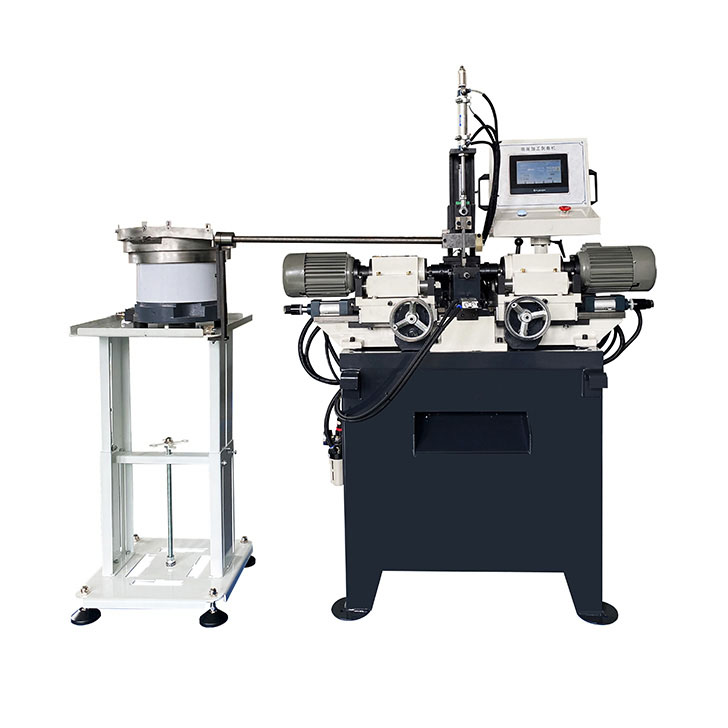
4. Introducing CJ-150 Bolt Head Chamfering Machine
Now imagine this:
- No manual loading
- No inconsistent results
- No bottleneck
That’s exactly what the CJ-150 Automatic Chamfering Machine is designed for.
5. What CJ-150 Actually Solves
✅ 1. Fully Automatic Operation
- Automatic feeding
- Continuous processing
- Minimal human intervention
👉 From labor-intensive → automation
✅ 2. High Efficiency
- Processes dozens to hundreds of bolts per minute
- Stable cycle time
👉 From slow → production-ready speed
✅ 3. Consistent Chamfer Quality
- Uniform angle
- Smooth surface
- Burr-free finish
👉 From “depends on worker” → standardized output
✅ 4. Designed for Large Bolts
- Specifically built for M30–M64 range
- Handles heavy and thick materials
👉 Not adapted — purpose-built
✅ 5. Post-Heat Treatment Friendly
- Clean edges reduce cracking risk
- Better coating adhesion
👉 Improves final product reliability
6. Before vs After (Real Impact)
| Situation | Before CJ-150 | After CJ-150 |
|---|---|---|
| Labor | 2–3 operators | 1 operator |
| Efficiency | Low | High |
| Quality | Inconsistent | Stable |
| Scrap rate | High | Reduced |
| Customer complaints | Frequent | Rare |
7. Where CJ-150 Fits in Your Line
Typical production flow:
Cold / Hot Forming → Thread Rolling → Heat Treatment →
👉 CJ-150 Chamfering → Surface Coating → Inspection
8. Who Needs This Most?
You should seriously consider CJ-150 if you:
- Produce bolts above M30
- Use hot forging or secondary machining
- Still rely on manual chamfering
- Supply to high-standard industries
9. Let’s Be Honest
Chamfering is not the “main process.”
But it can absolutely break your production.
👉 Slow it down
👉 Increase cost
👉 Ruin consistency
10. The Smarter Way Forward
CJ-150 is not just a machine.
It’s:
- A bottleneck remover
- A quality stabilizer
- A cost reducer
📸 Image Placeholder (Machine Overview)
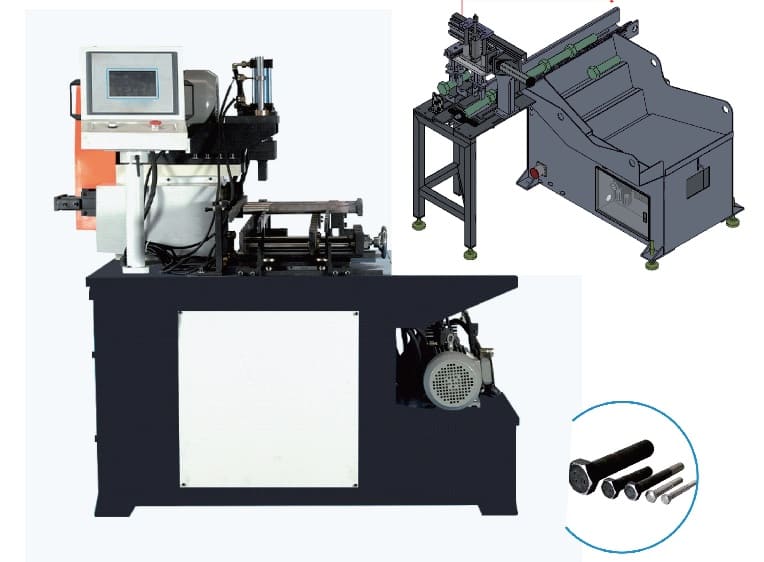
📸 Image Placeholder (Production Line Integration)
How to chamfer bolt head properly
11. Final Thought
In large bolt manufacturing,
the smallest detail often decides the biggest outcome.
Chamfering is one of them.
👉 If you are still doing it manually…
👉 Or struggling with consistency…
It might be time to upgrade.